



Sweden vs Slovenia: A Comparison of Two European Nations
Sweden and Slovenia are two countries located in Europe, but they are quite different in terms of size, geography, climate, and culture. In this article, we’ll explore the key differences and similarities between these two nations.
Geography and Climate
Sweden is a large country located in Northern Europe, with an area of 450,295 square kilometers. It shares borders with Norway and Finland and has a long coastline along the Baltic Sea. Sweden’s landscape is dominated by forests, lakes, and mountains, with the Scandinavian Mountains running along its western border.
Slovenia, on the other hand, is a much smaller country located in Central Europe (classified as Southern Europe under the UN geoscheme), with an area of just 20,273 square kilometers. It borders Italy, Austria, Hungary, and Croatia. Slovenia has a diverse landscape, with the Julian Alps in the northwest, the Adriatic Sea coast in the southwest, and the Pannonian Plain in the east.
Sweden has a temperate climate with cold winters and mild summers. The country experiences significant variations in daylight hours, with long, dark winters and short, bright summers. Slovenia has a more varied climate, with influences from the Mediterranean, Alpine, and continental regions. Summers are generally warm and dry, while winters can be cold and snowy in the mountains.
Economy and Living Standards
Sweden is a highly developed country with a strong economy based on exports, innovation, and a generous welfare system. It is known for its high standard of living, with a GDP per capita of around $52,000. Sweden is a leader in sustainability, renewable energy, and gender equality.
Slovenia is also a developed country but has a smaller economy compared to Sweden. It has a GDP per capita of around $26,000 and a focus on services, industry, and agriculture. Slovenia has made significant progress since its independence in 1991 and has a relatively high standard of living compared to many other Central European countries.
Safety and Security
Slovenia consistently ranks as one of the safest countries in Europe, with low crime rates across the board. Violent crime is rare, and most cities and towns feel secure at any time of day. The country’s small size and close-knit communities contribute to a strong sense of personal safety.
Sweden, while still a safe country by global standards, has faced growing concerns about public safety in recent years. Rising gun violence and gang-related crime in some urban areas have become a significant domestic issue. The Swedish government has introduced a number of new measures to address these challenges, but the trend has shifted public perception of safety compared to earlier decades.
Culture and Society
Swedish culture is known for its emphasis on equality, consensus, and social welfare. Swedes value work-life balance, environmental sustainability, and a relaxed, moderate approach to life. The country is famous for its design, music, and culinary traditions, including meatballs, cinnamon buns, and fika (coffee breaks).
Slovenian culture is a blend of Slavic, Germanic, and Mediterranean influences. The country is proud of its natural beauty, outdoor activities, and rich history. Slovenian cuisine is hearty and diverse, with dishes like Kranjska klobasa (sausage), štruklji (dumplings), and potica (nut roll) being popular.
Language and Education
Swedish is the official language of Sweden and is also spoken by minority groups in Finland and Estonia. English is widely spoken as a second language, especially among younger generations. Sweden has a highly regarded education system, with free education from primary school through university.
Slovenian is the official language of Slovenia, with Hungarian and Italian being recognized as co-official languages in some regions. Many Slovenians also speak English, especially in urban areas and the tourism industry. Slovenia has a well-developed education system, with a literacy rate of almost 100% and a growing number of international students.
Tourism and Attractions
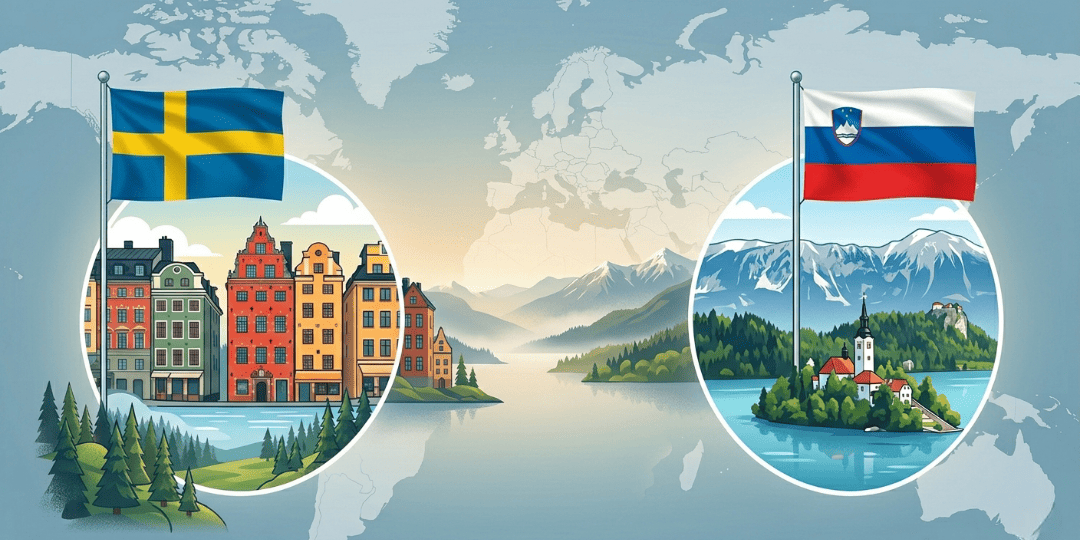
Sweden is a popular tourist destination, with millions of visitors each year. Some of the main attractions include the capital city of Stockholm, with its picturesque Old Town and royal palaces, the Vasa Museum, and the Stockholm Archipelago. Sweden is also known for its natural beauty, with vast forests, lakes, and mountains offering opportunities for outdoor activities like hiking, skiing, and camping.
Slovenia is a hidden gem in European tourism, with stunning natural scenery and charming medieval towns. The main attractions include Lake Bled, with its iconic island church and castle, the Postojna Cave, and the Triglav National Park. Slovenia is also known for its ski resorts, wine production, and thermal spas.
Conclusion
While Sweden and Slovenia are both located in Europe, they offer quite different experiences for visitors and residents. Sweden is known for its large size, advanced economy, and progressive social policies, while Slovenia offers a more intimate, diverse, and affordable experience with stunning natural beauty, a rich cultural heritage, and one of the highest levels of personal safety in Europe. Both countries have their unique charms and are well worth exploring for anyone interested in European travel or culture.