



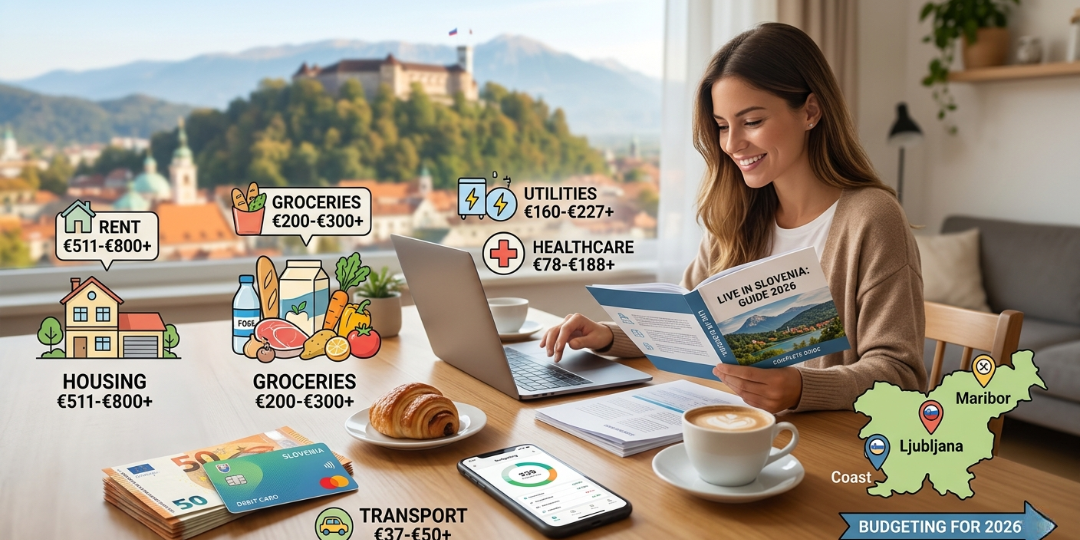
How Much Does It Cost to Live in Slovenia? Complete Guide for 2026
How much does it cost to live in Slovenia? This is one of the first questions expats, digital nomads, retirees, and families ask when considering a move to this beautiful Central European country. The short answer: significantly less than most Western European countries — while offering a comparable or superior quality of life. In this comprehensive guide, we break down Slovenia’s cost of living across every major expense category so you can budget accurately for 2026.
Slovenia Cost of Living: Quick Overview
Slovenia sits in a sweet spot — more affordable than Austria, Germany, or Italy, yet more developed and safer than many Eastern European alternatives. Key facts:
- Consumer prices in Slovenia are about 45% lower than in the U.S.
- Rent prices are on average 190% lower in Slovenia compared to the U.S.
- A single person can live comfortably on €1,300–€1,600 per month including rent
- A family of four typically requires €3,000–€3,500 per month
- The average monthly cost of living for a single person, excluding rent, is approximately €627
- Slovenia’s cost of living decreases significantly as you move away from Ljubljana and coastal hubs
Slovenia offers affordable living without sacrificing quality — this is arguably the country’s single greatest advantage for expats and newcomers.
Estimated Monthly Costs: Summary Tables
Single Person
| Expense | Budget | Comfortable | Premium |
|---|---|---|---|
| Rent (1-bed, outside center) | €511–€618 | €618–€800 | €800–€1,100 |
| Basic utilities | €100–€160 | €160–€227 | €227–€350 |
| Groceries | €200–€250 | €250–€300 | €300–€450 |
| Dining out | €60–€100 | €100–€200 | €200–€350 |
| Public transport | €37 | €37–€50 | €50–€100 |
| Health insurance | €35–€78 | €78–€110 | €110–€200 |
| Internet & phone | €25–€35 | €35–€50 | €50–€80 |
| Entertainment & leisure | €30–€80 | €80–€150 | €150–€300 |
| Personal care & clothing | €50–€80 | €80–€150 | €150–€300 |
| Total | €1,041–€1,381 | €1,431–€2,037 | €2,037–€3,230 |
Family of Four
| Expense | Budget | Comfortable |
|---|---|---|
| Rent (3-bed apartment) | €1,000–€1,400 | €1,400–€2,000 |
| Utilities | €200–€300 | €300–€450 |
| Groceries | €500–€650 | €650–€900 |
| Dining out | €100–€200 | €200–€400 |
| Transport (2 monthly passes + car costs) | €150–€250 | €250–€400 |
| Health insurance (family) | €100–€250 | €200–€350 |
| Children’s activities & education | €100–€300 | €300–€600 |
| Internet, phone, streaming | €50–€80 | €80–€120 |
| Entertainment & leisure | €100–€200 | €200–€400 |
| Total | €2,300–€3,630 | €3,580–€5,620 |
Housing Costs in Slovenia
Housing is the largest single expense in Slovenia, with rental and purchase prices fluctuating dramatically depending on location.
Rental Prices by City (2026)
Ljubljana (capital):
- 1-bedroom, city center: €740–€1,100/month
- 1-bedroom, outside center: €618–€800/month
- 3-bedroom, city center: €1,500–€2,200/month
Maribor (second largest city):
- 1-bedroom: €450–€650/month
- 3-bedroom: €800–€1,100/month
Koper (Adriatic coast):
- 1-bedroom: €600–€850/month
- 3-bedroom: €1,000–€1,400/month
Smaller cities (Celje, Kranj, Novo Mesto):
- 1-bedroom: €380–€550/month
- 3-bedroom: €650–€900/month
Rural areas:
- 1-bedroom: €300–€500/month
- House rental: €500–€900/month
Property Purchase Prices
The average monthly rent for a one-bedroom apartment in the city center of Slovenia is approximately €606, while outside the center it is about €511. For buyers:
- Existing apartments: €216,000–€260,000 average
- Ljubljana city center: €5,000–€6,000 per m²
- Ljubljana outskirts: €3,500–€4,000 per m²
- Countryside homes: €180,000–€280,000 average
Rental prices in Slovenia have been steadily increasing, particularly in Ljubljana, but the market still offers good value for money relative to safety and services provided.
Food Costs in Slovenia
Slovenia offers excellent food quality at accessible prices — whether you shop at local markets, discount supermarkets, or dine out regularly.
Grocery Prices
Monthly grocery costs in Slovenia for one person: €200–€300 (cooking mostly at home).
Key price benchmarks at supermarkets (Lidl, Hofer, Spar, Mercator):
| Item | Price |
|---|---|
| Milk (1L) | €0.90–€1.30 |
| Bread (500g) | €1.20–€2.50 |
| Eggs (12) | €2.50–€3.50 |
| Chicken breast (1kg) | €5.00–€7.50 |
| Local cheese (1kg) | €5.00–€10.00 |
| Apples (1kg) | €1.20–€2.00 |
| Tomatoes (1kg) | €1.50–€3.00 |
| Rice (1kg) | €1.00–€2.00 |
| Fresh seafood (1kg) | €8.00–€20.00 |
| Beer (0.5L, store) | €0.80–€1.50 |
| Wine (750ml, local) | €3.00–€8.00 |
Local markets in Slovenia offer fresh produce typically priced between €2–€6 per kilogram, making them an affordable option for maintaining a healthy diet. Budget-friendly supermarkets like Lidl and Hofer provide groceries at prices generally ranging from €1–€3 for most items.
Grocery prices in Slovenia are generally lower than in neighboring Austria and Italy — allowing residents to maintain a balanced, nutritious diet without high expenses.
Dining Out
Restaurants offer everything from budget Slovenian cuisine to international fine dining:
- Inexpensive restaurant meal: €10–€14 per person
- Three-course meal for two (mid-range): €45–€65
- Fast food meal: €8–€12
- Coffee (espresso): €1.50–€2.50
- Beer (0.5L, pub): €2.50–€4.00
- Glass of local wine: €2.50–€5.00
Many restaurants offer excellent value daily lunch specials (dnevno kosilo) — typically a two-course meal for €8–€12. This is how many locals and expats keep dining costs down while eating well.
Transportation Costs in Slovenia
Public Transport
Slovenia has an affordable and expanding public transport network. Many Slovenian cities are compact and walkable, with good bus connectivity.
- Single bus ticket: €2.00 (regional); €1.50 (Ljubljana city)
- Monthly pass (Ljubljana): €37 — one of the most affordable monthly tickets in Europe
- Monthly pass (regional): approximately €43
- Annual BicikeLJ bike-sharing subscription (Ljubljana): €3
The bus network connects all major cities and towns. Car ownership is not necessary for city living, though it is useful for exploring rural Slovenia.
Car Ownership
- Rental car: €30–€40/day (compact); €40–€50/day (mid-sized)
- Gasoline: approximately €1.50–€1.80 per liter
- Car insurance (annual): €400–€800
- Vehicle registration (annual): €100–€200
Public transit in Slovenia is robust and cheap — many expats in Ljubljana, Maribor, and other cities live comfortably without car ownership, saving €300–€600 per month compared to owning a vehicle.
Utility Costs in Slovenia
Basic utilities for an 85m² apartment in Slovenia — electricity, heating, cooling, water, and garbage — cost an average of €227 per month. Prices vary by season:
- Summer: €55–€110/month
- Winter: €160–€330/month (heating dominates)
Additional utilities:
- High-speed internet: €25–€40/month
- Mobile phone plan: €10–€25/month
- Streaming services (Netflix, etc.): €10–€20/month
Healthcare Costs in Slovenia
Slovenia has a public healthcare system funded through social contributions and taxes, ensuring that all residents who pay taxes are covered by the compulsory health insurance scheme.
- Compulsory public health insurance: covered through employer/self-employment contributions
- Supplemental insurance (dopolnilno): €39–€110/month — covers co-payments
- Private specialist consultation: approximately €80–€110 per visit
- Total monthly healthcare cost (resident): approximately €78–€188
For those without access to the public system, private health insurance covering at least €30,000 in emergency expenses is required. The cost of health insurance in Slovenia typically costs less than $450 per month — far below comparable US or UK private insurance.
Education Costs in Slovenia
For families with children, Slovenia’s public education system is world-class and largely free:
- Public primary and secondary school: free (compulsory ages 6–15)
- Kindergarten / preschool: €100–€300/month (income-based subsidies available)
- University tuition (state universities): €2,500–€3,500/year for non-EU students
- International schools: €8,000–€20,000/year
Slovenia ranks 25th globally for education quality (Legatum Prosperity Index), making it an excellent destination for families prioritizing schooling.
Internet and Digital Costs
Slovenia has excellent digital infrastructure — useful for remote workers and digital nomads:
- Home broadband (100Mbps+): €25–€40/month
- Mobile data plan (20GB+): €10–€20/month
- Co-working space membership: €100–€200/month (Ljubljana)
Slovenia is well-suited for remote work and digital nomads — high internet penetration, modern infrastructure, EU legal framework, and a growing expat community make it one of Central Europe’s best bases for location-independent professionals.
How Much Does It Cost to Live in Slovenia vs Neighboring Countries?
| Category | Slovenia | Austria | Italy | Croatia | Hungary |
|---|---|---|---|---|---|
| 1-bed apt (outside center) | €511–€800 | €900–€1,400 | €700–€1,200 | €450–€700 | €350–€600 |
| Monthly groceries (1 person) | €200–€300 | €300–€450 | €280–€400 | €180–€280 | €180–€280 |
| Monthly transport pass | €37–€50 | €51–€105 | €35–€100 | €20–€40 | €15–€35 |
| Healthcare (monthly) | €78–€188 | €100–€250 | €100–€200 | €50–€150 | €50–€150 |
| Average net salary | €1,283 | €2,000+ | €1,500+ | €900–€1,100 | €800–€1,000 |
| Safety ranking | Top 10 EU | Top 10 EU | Medium | High | Medium |
Slovenia offers the best balance of cost, safety, infrastructure, and quality of life among its immediate neighbors — cheaper than Austria and Italy while significantly safer and better developed than Croatia and Hungary.
Can US Citizens Live in Slovenia?
Yes — US citizens can live in Slovenia legally. For stays beyond 90 days, a temporary residence permit is required. Common pathways include employment, business registration, family reunification, or the digital nomad visa route. Once legally registered, US citizens access the same public services as other residents.
What Is the Average House Price in Slovenia?
The average existing apartment in Slovenia costs €216,000–€260,000. In Ljubljana’s city center, prices reach €5,000–€6,000 per square meter. Rural and countryside properties offer significantly better value — detached homes average €180,000–€280,000.
Can I Speak English in Slovenia?
Yes — English proficiency in Slovenia is high, particularly among younger generations and in urban areas. Ljubljana, Bled, and coastal towns are very English-friendly. Learning basic Slovenian is appreciated and makes daily life considerably easier.
How Much Money Do I Need to Move to Slovenia?
A realistic relocation budget for moving to Slovenia:
| One-time Cost | Amount |
|---|---|
| Security deposit (1–2 months rent) | €1,000–€2,200 |
| First month’s rent | €511–€1,100 |
| Residency permit application | €1250–€2500 |
| Furnishing & household setup | €500–€3,000 |
| Health insurance (first months) | €150–€400 |
| Emergency fund | €2,000–€4,000 |
| Total | €5,411–€13,200 |
Tips for Reducing Your Cost of Living in Slovenia
- Live outside Ljubljana. Maribor, Celje, or Kranj offer costs 15–25% lower with excellent quality of life.
- Shop at Lidl and Hofer. These discount chains significantly reduce monthly grocery bills.
- Use public transport. Ljubljana’s €37 monthly pass makes car ownership unnecessary.
- Cook at home. Slovenia’s fresh, local produce is excellent — cooking at home saves €150–€300/month versus dining out.
- Explore local markets. Fresh, seasonal produce at local markets is often cheaper and better quality than supermarkets.
- Take advantage of free outdoor activities. Hiking, cycling, and exploring Slovenia’s national parks costs virtually nothing.
- Get supplemental health insurance promptly. At €35–€110/month, it covers most healthcare co-payments and prevents large out-of-pocket medical expenses.
Conclusion
How much does it cost to live in Slovenia? For a single person, a comfortable lifestyle runs €1,300–€1,600 per month including rent — and a budget-conscious lifestyle is achievable for under €1,100. A family of four should plan for €3,000–€3,500 per month for a comfortable standard of living.
These figures represent exceptional value for a country that consistently ranks among the safest in the world, with excellent healthcare, strong education, stunning natural beauty, and full EU membership. Whether you are a digital nomad seeking an affordable European base, a family looking for a safe and high-quality environment, or a retiree stretching a fixed income — Slovenia’s cost of living makes it one of the most compelling destinations in Europe today.
Start planning your move to Slovenia today — the quality of life you get for the money is genuinely hard to match anywhere else in the European Union.