



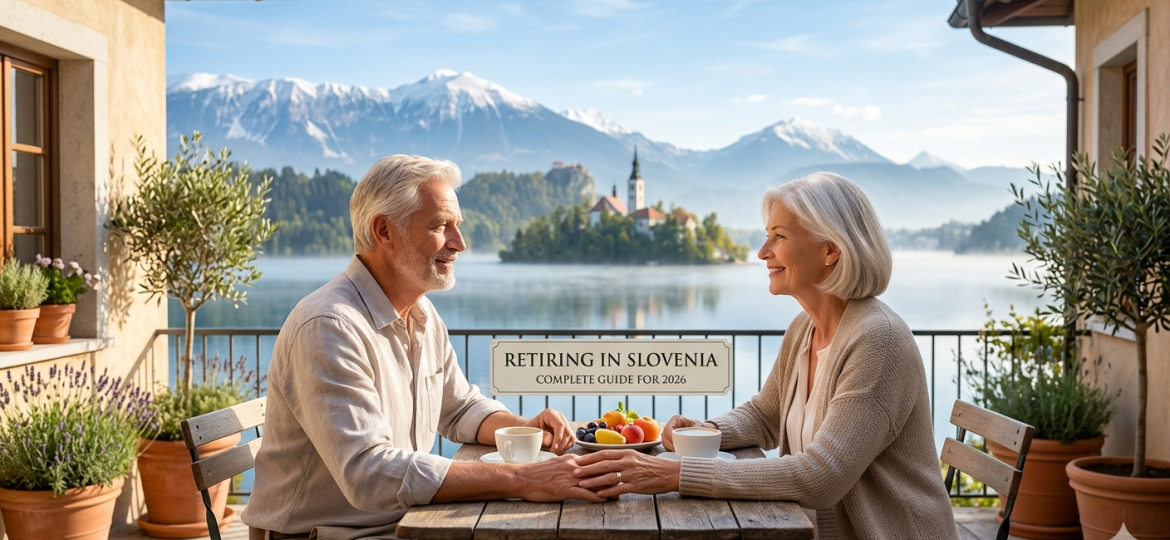
How Much Does It Cost to Retire in Slovenia? Complete Guide for 2026
Slovenia is increasingly recognized as one of Europe’s most attractive retirement destinations — and for good reason. This small, safe country in Central Europe offers stunning natural beauty, rich cultural heritage, excellent healthcare, and an affordable cost of living that makes stretching a fixed income genuinely comfortable. But how much does it cost to retire in Slovenia? In this guide, we break down every major expense so you can plan your retirement years with confidence.
Why Retire in Slovenia?
Before diving into costs, let’s understand why retirees are choosing Slovenia over more traditional destinations like Spain, Portugal, or France.
Slovenia offers a rare combination of advantages for foreign retirees:
- Safe environment: Slovenia is among the safest countries in the world. The 2022 Gallup Law and Order report shows only five other countries where people feel safer walking alone. Ljubljana is rated a low-threat location for crime by the U.S. Department of State.
- Stunning natural beauty: From the Julian Alps to Lake Bohinj and the Adriatic Sea, Slovenia’s diverse landscapes provide an extraordinary outdoor lifestyle.
- Excellent healthcare system: Slovenia’s national healthcare system ranks high globally with advanced medical facilities comparable to Western European standards.
- Affordable cost of living: Consumer prices in Slovenia are about 45% lower than in the U.S., and rent prices are on average 190% lower.
- Central location: Slovenia’s central location in Europe allows easy access to Italy, Austria, Croatia, and Hungary — ideal for retirees who love to travel.
- EU membership: Full legal protections, modern infrastructure, and freedom of movement across the Schengen Area.
- English-friendly: Particularly in Ljubljana and tourist areas, English is widely spoken.
How Much Money Do You Need to Retire in Slovenia?
The core question for most retirees: what is the monthly budget needed to retire comfortably in Slovenia?
Here is a realistic breakdown for 2026:
Monthly Budget: Single Retiree
| Expense | Budget Lifestyle | Comfortable Lifestyle |
|---|---|---|
| Rent (1-bed, outside center) | €500–€618 | €618–€800 |
| Utilities | €55–€160 | €150–€300 |
| Groceries | €200–€270 | €270–€380 |
| Dining out | €80–€150 | €150–€250 |
| Healthcare (supplemental insurance) | €45–€110 | €78–€110 |
| Transport | €37–€50 | €50–€100 |
| Entertainment & leisure | €50–€100 | €100–€200 |
| Internet & phone | €25–€40 | €30–€50 |
| Miscellaneous | €100–€150 | €150–€250 |
| Total | €965–€1,548 | €1,595–€2,440 |
Monthly Budget: Retired Couple
| Expense | Budget Lifestyle | Comfortable Lifestyle |
|---|---|---|
| Rent (2-bed, outside center) | €650–€900 | €900–€1,200 |
| Utilities | €100–€250 | €200–€350 |
| Groceries | €300–€420 | €420–€560 |
| Dining out | €120–€200 | €200–€350 |
| Healthcare (supplemental, both) | €90–€220 | €156–€220 |
| Transport | €50–€80 | €80–€150 |
| Entertainment & leisure | €80–€150 | €150–€300 |
| Internet & phone | €30–€50 | €40–€60 |
| Miscellaneous | €150–€200 | €200–€300 |
| Total | €1,520–€2,470 | €2,346–€3,490 |
Key takeaway: Retiring in Slovenia requires an estimated monthly budget of $1,500–$1,900 for a single retiree, or $2,000–$2,500 for a couple to live comfortably. This is significantly lower than comparable lifestyles in Western European countries.
Housing Costs for Retirees in Slovenia
Housing is the largest single expense for retirees in Slovenia. The good news: prices are significantly lower than in most European retirement destinations.
Rental Options
- One-bedroom apartment, Ljubljana city center: approximately €740 per month
- One-bedroom apartment, outside Ljubljana center: approximately € 618 per month
- Smaller towns (Škofja Loka, Kranj, Novo Mesto): €500–€700 per month
- Rural areas and countryside: significantly lower than urban centers
Property Purchase Options
Slovenia offers a variety of housing options for retirees looking to buy:
- Rural houses with substantial land parcels: €130,000–€250,000
- Atrium bungalows (modern single-story homes): €90,000–€160,000
- Semi-detached houses with gardens: €130,000–€220,000
- Existing apartments (average): €216,000–€260,000
- Detached countryside homes (average): €180,000–€280,000
Expats can find better deals on housing by exploring areas outside popular tourist destinations like Ljubljana and Bled. In smaller towns, the cost of rent, groceries, and dining out is much lower than in the capital.
Healthcare Costs for Retirees in Slovenia
Healthcare is one of Slovenia’s greatest strengths for retirees. The healthcare system ranks high globally and is known for advanced medical facilities and equipment comparable to Western European standards.
Private Healthcare
- Private specialist consultation: approximately $110 per visit
- The cost of health insurance in Slovenia typically costs less than $450 per month total — a fraction of US or UK private insurance costs
This represents outstanding value compared to healthcare costs in the US or even Western Europe.
Residency Requirements for Retirees in Slovenia
Can a US Citizen Retire to Slovenia?
Yes — US citizens can retire to Slovenia, but the pathway requires planning. Slovenia does not have a designated retirement visa for non-EU citizens. Instead, US citizens most commonly obtain a one-year temporary residence permit that is renewable annually.
How to Get a Temporary Residence Permit as a Retiree
The most common pathways for retirees to obtain a temporary residence permit in Slovenia include:
1. Business investment: The most reliable route for non-EU retirees. Requires registering a Slovenian company (d.o.o.) with a minimum investment of €7,500 and demonstrating business activity. This pathway requires ongoing accounting and compliance.
2. Real estate ownership: Most expats cannot apply for residency through property ownership alone. Property purchase can support an application but is rarely sufficient on its own without a business registration or another qualifying ground.
3. Sufficient passive income: To apply for a temporary residence visa, applicants must prove a monthly income equal to Slovenia’s basic monthly income — currently around $1,000 per month. However, this pathway typically requires additional grounds beyond passive income alone.
After five years of living in Slovenia with a temporary residence permit, retirees can apply for permanent residency — which provides long-term stability without annual renewals.
Is It Easy for Americans to Move to Slovenia?
Slovenia is moderately accessible for American retirees. The country does not have a straightforward passive income or retirement visa — unlike Portugal’s D7 or Spain’s Non-Lucrative Visa. Most US retirees need to structure their stay through business registration or other qualifying grounds. Consulting with a local immigration lawyer and a financial advisor is strongly recommended before making the move.
Tax Implications for Retirees in Slovenia
Understanding tax implications before retiring abroad is critical. Slovenia taxes its residents on worldwide income, which means foreign pensions and investment income are subject to Slovenian tax.
Key tax rates for retirees:
- Income tax: progressive rates from 16% to 50%
- Capital gains tax: 25% (decreasing with length of ownership)
- Pension income: taxed as regular income at progressive rates
Important: Slovenia has tax treaties with many countries to avoid double taxation. If your home country has a tax treaty with Slovenia, your pension may be taxable only in one jurisdiction. Verify this with a qualified financial advisor before relocating.
Consulting with both a Slovenian tax specialist and a financial advisor from your home country before retiring to Slovenia is essential for optimizing your tax situation.
Cost of Living: Slovenia vs. Other Retirement Destinations
| Category | Slovenia | Portugal | Spain | France | USA |
|---|---|---|---|---|---|
| 1-bed apt (outside center) | €618 | €900 | €800 | €900 | €1,400+ |
| Monthly groceries (1 person) | €200–€300 | €250–€350 | €250–€350 | €300–€400 | €350–€500 |
| Healthcare (monthly, approx.) | $123–$188 | €150–€250 | €100–€200 | €150–€300 | $500–$1,500+ |
| Safety ranking | Top 6 globally | High | Medium-High | Medium | Medium |
| EU membership | Yes | Yes | Yes | Yes | No |
| English proficiency | High | Medium | Medium | Low | Native |
Slovenia stands out for its exceptional combination of low cost of living, top-tier safety, EU membership, and high-quality healthcare — making it one of the best-value retirement destinations in Europe.
What Is the Easiest European Country for Americans to Retire In?
For Americans seeking the most straightforward retirement visa, Portugal’s D7 Passive Income Visa and Spain’s Non-Lucrative Visa are generally considered easier entry points. However, both of those countries have significantly higher costs of living and housing than Slovenia.
Slovenia’s advantage lies in its lower total cost of retirement — even accounting for the additional setup costs of registering a business. A retiree who successfully establishes residency in Slovenia can live on substantially less than in Portugal or Spain, particularly for healthcare and housing.
Outdoor Activities and Lifestyle for Retirees
One of the most compelling aspects of retiring in Slovenia is the extraordinary access to nature and outdoor activities at little to no cost:
- Hiking in Triglav National Park and the Julian Alps — world-class trails for all fitness levels
- Cycling on dedicated trails through vineyards, forests, and lakesides
- Skiing at resorts like Kranjska Gora and Krvavec — day ski passes from €30–€50
- Swimming and kayaking on Lake Bled, Lake Bohinj, and the Soča River
- Stand up paddleboarding on Slovenia’s pristine lakes
- Thermal spas — Slovenia is famous for its thermal wellness centers (Terme Olimia, Terme Čatež, Terme 3000)
These activities are largely free or very affordable, contributing to a healthy, active retirement lifestyle without large entertainment budgets.
Local Culture and Community for Retirees
Slovenia is known for its rich cultural heritage, vibrant community life, and welcoming locals. The country has a strong café culture central to social life — ideal for retirees seeking connection and community.
Local events, festivals, and traditions are plentiful throughout the year. Local language classes are available and recommended — even basic Slovenian dramatically improves daily interactions. The expat community in Ljubljana is active and growing, with regular meetups and social events.
Practical Tips for Retiring to Slovenia
- Work with a financial advisor experienced in international retirement planning — tax implications of retiring abroad are complex.
- Consult an immigration lawyer before starting the residency process — Slovenia’s system rewards preparation.
- Visit Slovenia before committing — spend at least one to three months exploring different regions and cities.
- Explore smaller towns like Maribor, Kranj, or Novo Mesto — costs are 15–25% lower than Ljubljana with excellent quality of life.
- Register for supplemental health insurance as soon as you become a legal resident.
- Learn basic Slovenian — it opens doors and builds goodwill with locals.
- Explore the thermal spa culture — affordable, health-promoting, and deeply embedded in Slovenian society.
- Check tax treaty details between Slovenia and your home country with a financial advisor.
Conclusion
Retiring in Slovenia is a financially sound and deeply rewarding choice for those willing to navigate the residency process thoughtfully. With a monthly budget of $1,500–$1,900 for a single retiree or $2,000–$2,500 for a couple, you can enjoy a comfortable lifestyle with excellent healthcare, stunning natural beauty, rich cultural heritage, and the security of living in one of the world’s safest countries.
Slovenia is a hidden gem in the European retirement landscape — offering low cost of living, an extraordinary natural environment, and EU legal protections that make it a genuinely attractive destination for American and international retirees.
Start with a consultation from a qualified immigration lawyer and a financial advisor who understands international retirement planning — then come and see for yourself why so many retirees are choosing Slovenia as their forever home.